The Court reins in the DGI: it cannot sue the Administrative Tax Tribunal in the contentious-administrative courts
The Third Chamber dismissed the Directorate General of Revenue's action against the TAT, clarifying that the tribunal is the DGI's own administrative appellate body, not its adversary before the courts.
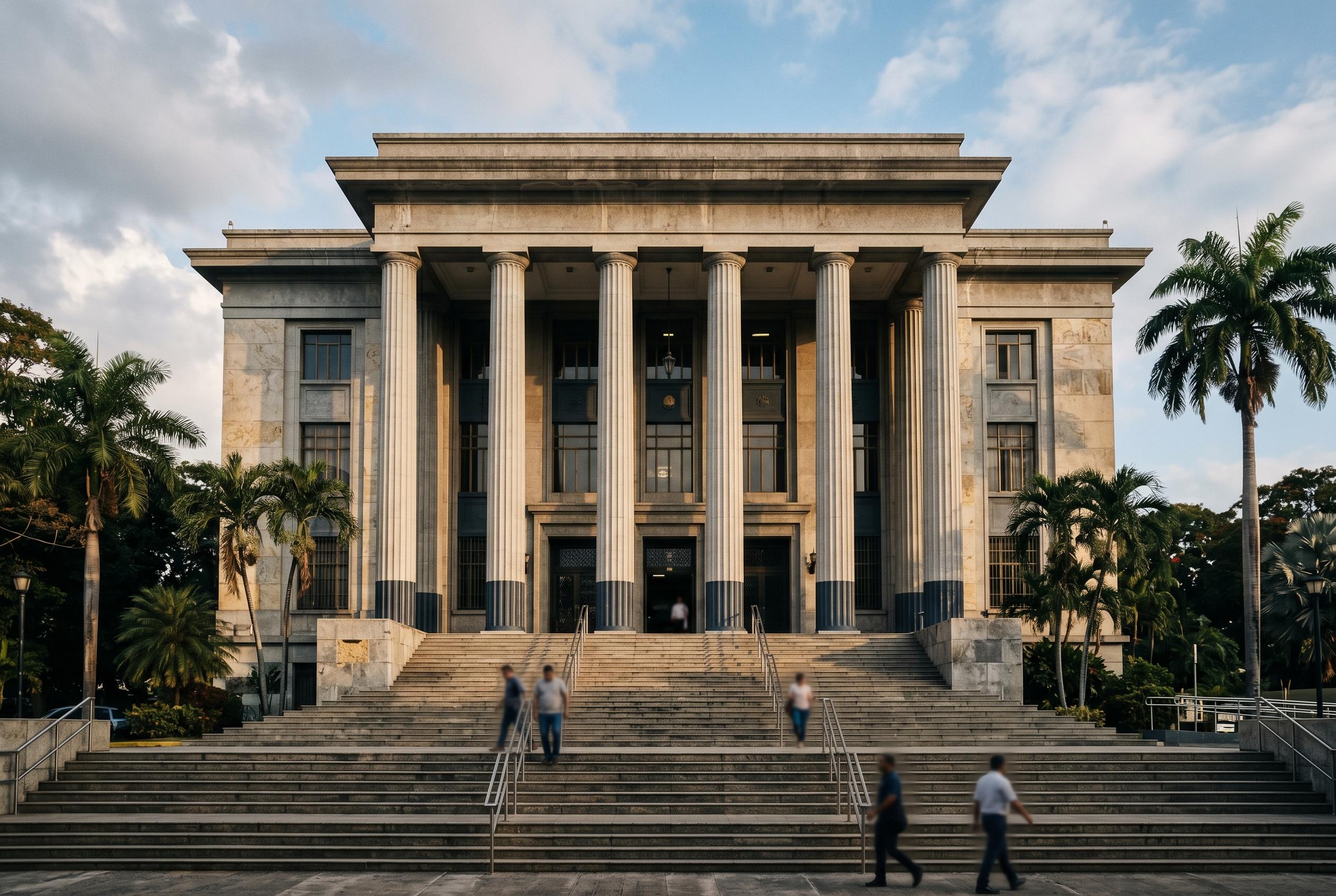
The Third Chamber for Administrative Contentious and Labor Matters of the Supreme Court of Justice established in July 2022 a principle of importance for Panama's tax legal order: the Directorate General of Revenue of the Ministry of Economy and Finance (DGI) may not challenge resolutions of the Administrative Tax Tribunal (TAT) through the contentious-administrative courts. The decision, issued on July 8, 2022 by reporting justice Carlos Alberto Vásquez Reyes, was a dismissal for inadmissibility — without reaching the merits — grounded in the very structure of the administrative tax organization.
The case arose from an ordinary administrative proceeding: a taxpayer had requested, on November 8, 2019, the issuance of a Tax Residency Certificate from the DGI's Tax Conventions Division for fiscal year 2019. The DGI denied the request through Resolution No. 201-3459 of April 29, 2021, confirmed on internal appeal by Resolution No. 201-9672 of October 11, 2021. The taxpayer appealed to the TAT, which reversed both acts and ordered the DGI to issue the certificate. Faced with that outcome, the DGI brought before the Third Chamber a full-jurisdiction contentious-administrative complaint seeking a declaration that the TAT resolution was null and void for being unlawful.
Justice Vásquez Reyes found the action to be manifestly inadmissible on institutional design grounds. He cited Article 156 of Law No. 8 of 2010, which creates the TAT as an independent body within the Executive Branch with jurisdiction to hear and decide, as the final administrative instance, appeals against DGI resolutions. The TAT's decisions, that provision states, exhaust the administrative appeal process, and only the taxpayer — not the administration — may resort to the contentious-administrative courts. The ruling underscores that the DGI, in its relationship with the regulated party, forms part of a single institutional unit against which the TAT acts as the appellate body: allowing the DGI itself to sue the TAT would effectively transform the Third Chamber into a third instance within the tax proceeding, a function the law does not assign to it.
The Court also noted that the hierarchical subordination between the DGI and the TAT imposes on the administration the principles of good faith and legitimate expectations toward the taxpayer. The State, the justice observed, occupies a privileged position vis-à-vis the regulated party; permitting the tax authority to reverse, through direct judicial action, the decision of the specialized body created precisely to oversee that authority would undermine the guarantee system built into the tax proceeding. Invoking Article 50 of Law No. 135 of 1943 — which authorizes dismissal of complaints that fail to meet the statutory requirements — the Third Chamber declined to admit the action.
The principle consolidated by this dismissal has immediate practical effect: once the TAT reverses or modifies a DGI resolution, that decision is final at the administrative level, and the tax authority must comply. The judicial avenue for challenging tax matters belongs to the taxpayer, not to the Directorate General of Revenue. The ruling thus reinforces the functional independence of the TAT — established by Law No. 8 of 2010 as a specialized and impartial arbiter of disputes between the tax authority and regulated parties — and clearly delineates the respective roles within Panama's tax justice system.
Sources
- Corte Suprema de Justicia, Sala Tercera Contencioso Administrativo — Demanda contencioso-administrativa de plena jurisdicción (inadmisión), ponente Carlos Alberto Vásquez Reyes, 8 de julio de 2022